Authentic Jordanian Mansaf Recipe: A Taste of Heritage and Hospitality
There are dishes, and then there are cultural experiences. Jordanian Mansaf unequivocally falls into the latter category. More than just a meal, Mansaf is a vibrant symbol of generosity, unity, and the rich Bedouin heritage that defines Jordan. If you've ever yearned to delve into the heart of Middle Eastern cuisine, mastering an authentic mansaf recipe is an essential step. This article will guide you through creating this magnificent dish, sharing not just the steps but also the stories and traditions that make Mansaf truly special.
The Story Behind Mansaf: A Culinary Journey from Bedouin Roots
To truly appreciate Mansaf, one must understand its origins. This iconic dish began as a simple, hearty meal among the Bedouin tribes of Jordan – a testament to their nomadic lifestyle and resourcefulness. Originally, it was a straightforward preparation of lamb cooked with fermented milk or water, served alongside bulgur or rice. As time progressed and communities evolved, so too did Mansaf, adapting to local ingredients and culinary advancements.
The most significant evolution was the introduction of Jameed – a unique, dried fermented yogurt made from goat's milk. This ingredient gave Mansaf its distinctive tangy flavor and creamy texture, setting it apart from other lamb and rice dishes in the region. When Jordan gained its independence, Mansaf was officially embraced as the national dish, cementing its place not just on the dining table, but in the national identity.
For Jordanians, Mansaf transcends its role as mere sustenance. It embodies hospitality, unity, and the enduring connection to their ancestors. It's the centerpiece of family gatherings, weddings, religious holidays like Ramadan, and the ultimate dish to offer honored guests. To serve Mansaf is to extend the warmest welcome, a gesture that speaks volumes without a single word. To learn more about its fascinating history, explore Unveiling Mansaf: Jordan's National Dish and Its Rich Bedouin Roots.
What Makes a True Jordanian Mansaf? Deconstructing the Layers
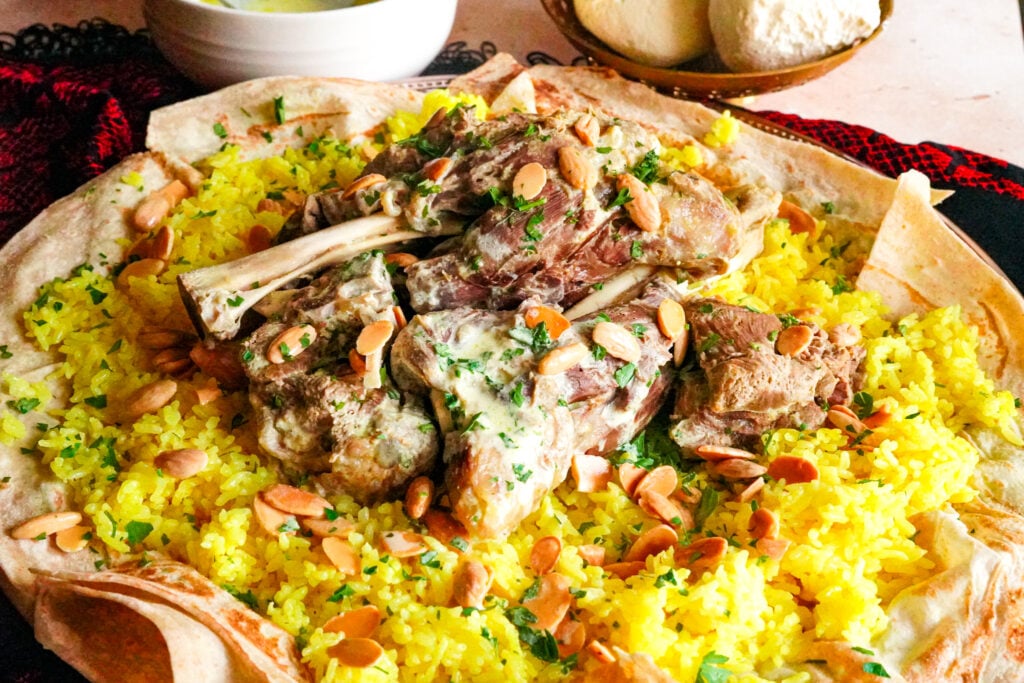
A traditional Jordanian Mansaf is a masterpiece of textures and flavors, presented in an impressive multi-layered format designed for communal feasting. Understanding these layers is key to appreciating and preparing an authentic mansaf recipe.
- The Foundation: Shrak (Markook) Bread
At the base of the grand serving platter lies Shrak, also known as Markook. This incredibly thin, unleavened flatbread is torn into pieces and generously soaked with some of the rich Jameed sauce and lamb broth. Its purpose is twofold: to absorb the delicious juices and to provide a soft, flavorful bed for the layers above. - The Heart: Aromatic Yellow Rice
Piled high upon the bread is fluffy, aromatic long-grain rice, typically colored a vibrant yellow with turmeric. This adds a subtle earthy flavor and a beautiful visual contrast to the rich white of the Jameed. - The Star: Tender Lamb
The true star of the show, succulent pieces of slow-cooked lamb, are arranged over the rice. Traditionally, bone-in cuts like shoulder or leg are preferred for their rich flavor and fall-off-the-bone tenderness. - The Soul: Jameed Sauce
The crowning glory is the copious amount of creamy, tangy Jameed sauce generously poured over the lamb and rice. This distinctive yogurt sauce, infused with the lamb's cooking broth and fragrant spices, is what truly defines Mansaf. It provides a unique sourness and a velvety texture that binds all the elements together. - The Garnish: Nuts and Parsley
Finally, Mansaf is adorned with a sprinkle of chopped fresh parsley for color and a generous scattering of toasted almonds or pine nuts, adding a delightful crunch and nutty aroma.
Each layer contributes to the overall harmony of the dish, creating an unparalleled culinary experience. For a deeper dive into these components, read Mansaf Explained: The Layers of Lamb, Jameed & Jordan's Culinary Heart.
Mastering the Authentic Mansaf Recipe: Step-by-Step Guide
While the prospect of making Mansaf might seem daunting, it's a labor of love that is incredibly rewarding. This mansaf recipe aims to simplify the process while staying true to its authentic roots.
Essential Ingredients for Your Mansaf Recipe:
- For the Lamb:
- 2-3 kg lamb cut into large pieces (shoulder or leg is ideal, bone-in for flavor)
- 1 large onion, quartered
- 4-5 bay leaves
- 10-15 black peppercorns
- 4-5 green cardamom pods, lightly crushed
- 1-2 cinnamon sticks
- Water to cover
- Salt to taste (add towards the end of cooking the lamb)
- For the Jameed Sauce:
- 500g dry Jameed balls (rehydrated, see tip below) OR 1 kg plain full-fat yogurt + 250g labneh (thick strained yogurt) for a semi-authentic substitute
- Approximately 1-1.5 liters of lamb broth (from cooking the lamb)
- 1 teaspoon turmeric powder (for color)
- Pinch of ground cardamom (optional, to enhance flavor)
- Salt to taste (be careful as Jameed can be salty)
- For the Rice:
- 3 cups long-grain rice (e.g., Basmati), washed and soaked for 30 minutes
- 4.5 cups water or lamb broth
- 1 teaspoon turmeric powder
- 1 tablespoon oil or ghee
- Salt to taste
- For Assembly & Garnish:
- 2-3 large Shrak (Markook) flatbreads
- 1/2 cup slivered almonds or pine nuts, lightly toasted in olive oil or ghee
- 1/4 cup fresh parsley, finely chopped
Preparation Steps:
1. Preparing the Lamb Broth
- Rinse the lamb pieces thoroughly. Place them in a large pot and cover with cold water. Bring to a boil over high heat, skimming off any foam or impurities that rise to the surface. This step is crucial for a clear, flavorful broth.
- Once the foam is removed, add the quartered onion, bay leaves, black peppercorns, cardamom pods, and cinnamon sticks. Reduce heat to low, cover, and simmer for 2-3 hours, or until the lamb is fork-tender and easily falls off the bone.
- Once cooked, carefully remove the lamb pieces from the broth and set aside. Strain the broth through a fine-mesh sieve to remove all solids and spices. You'll need about 1-1.5 liters of this rich lamb broth for your Jameed sauce and rice. Season the broth with salt to taste.
2. Crafting the Jameed Sauce
Using Traditional Jameed Balls:
- If using dry Jameed balls, you'll need to rehydrate them first. Break the Jameed balls into smaller pieces and soak them in warm water (enough to cover) for several hours or overnight until softened.
- Once soft, rub the Jameed pieces between your hands or blend them with some of their soaking water until a smooth, thick liquid is formed. Strain this liquid to ensure no lumps remain. This concentrated Jameed is now ready.
- In a large pot, combine the prepared Jameed liquid with 1-1.5 liters of the strained lamb broth (adjusting consistency as needed). Add the turmeric powder and optional ground cardamom.
- Bring the mixture to a gentle simmer over low-medium heat, stirring constantly with a whisk to prevent curdling. This is the most crucial step! Never let it boil vigorously. Continue to simmer for 15-20 minutes, allowing the flavors to meld and the sauce to thicken slightly. Taste and adjust salt if necessary (Jameed can be naturally salty).
Using Yogurt Substitute (for easier access):
- In a blender, combine the plain yogurt, labneh, and 1 teaspoon of turmeric powder. Blend until smooth.
- In a large pot, gently heat about 1 cup of the strained lamb broth. Slowly whisk in the yogurt mixture, ensuring it's well combined. Gradually add more lamb broth, continuing to whisk, until you reach your desired consistency (usually similar to a thick soup).
- Bring the sauce to a very gentle simmer over low heat, stirring continuously to prevent curdling. Do not boil. Simmer for 15-20 minutes, then taste and adjust seasoning. This method will yield a less intensely tangy sauce than authentic Jameed but is a great alternative.
3. Cooking the Aromatic Rice
- Drain the soaked rice thoroughly. In a medium pot, heat the oil or ghee over medium heat. Add the drained rice and turmeric powder, stirring for 1-2 minutes until the rice is lightly coated and fragrant.
- Pour in the water or lamb broth and season with salt. Bring to a boil, then reduce the heat to very low, cover tightly, and simmer for 15-18 minutes, or until all the liquid is absorbed and the rice is tender. Do not lift the lid during cooking.
- Once cooked, remove from heat and let it sit, covered, for another 5-10 minutes. Fluff with a fork before serving.
4. Assembling the Mansaf Platter
- On a large, round serving platter (traditionally called a seder), tear the Shrak bread into smaller pieces and spread them evenly across the base. Ladle a generous amount of the Jameed sauce and some lamb broth over the bread to moisten it thoroughly.
- Next, evenly spread the fluffy yellow rice over the moistened bread.
- Arrange the tender lamb pieces artfully on top of the rice.
- Generously pour the remaining Jameed sauce over the lamb and rice. Don't be shy; Mansaf should be dripping with this glorious sauce!
- Finally, garnish with the toasted almonds or pine nuts and a sprinkle of fresh chopped parsley.
Tips for a Perfect Mansaf and Cultural Etiquette
- Quality of Jameed: If you can find authentic dry Jameed from a Middle Eastern specialty store, it will make a world of difference in flavor. The substitutes are good, but the real deal is irreplaceable.
- Patience with Lamb: Don't rush the lamb cooking. Low and slow is the key to achieving that melt-in-your-mouth tenderness.
- Watch the Jameed Sauce: When making the Jameed sauce, constant, gentle stirring over low heat is crucial to prevent curdling. If using fresh yogurt, tempering it by gradually adding warm broth before combining can also help.
- Communal Eating: Mansaf is traditionally eaten communally from the large platter, often with the right hand. Guests are encouraged to take from the section directly in front of them. As the host, it's customary to offer the choicest pieces of lamb to your guests.
- Generosity is Key: Don't skimp on the Jameed sauce or the garnishes. Mansaf is meant to be a lavish and generous offering.
Bringing this authentic mansaf recipe to your table is more than just preparing a meal; it's an invitation to experience the warmth and richness of Jordanian culture. From the ancient Bedouin traditions to the modern-day celebrations, Mansaf remains a powerful symbol of connection and hospitality. We encourage you to embark on this culinary adventure, savoring each layer and the profound story it tells. Enjoy the process, share with loved ones, and immerse yourself in a true taste of heritage.
